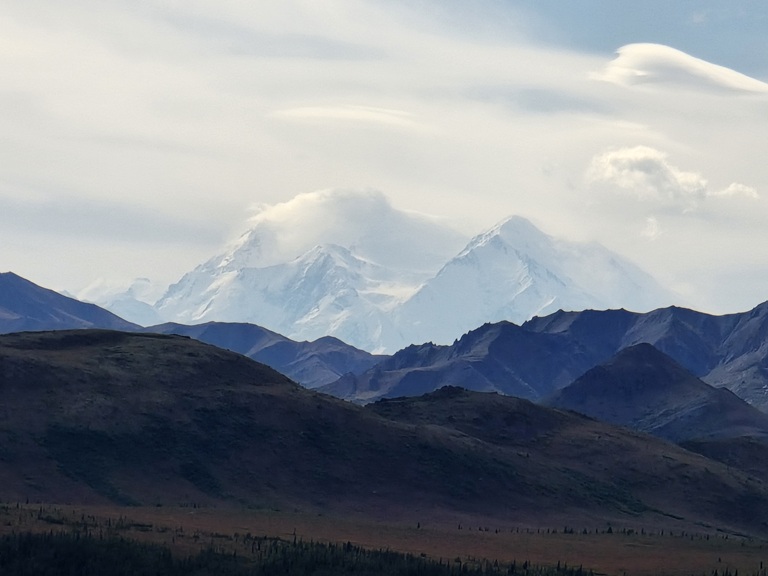
Mt Denali. A peerless giant in an extraordinary place.
Today we visited the magnificent Denali National Park. First we drove through the forested areas until we arrived at the Tundra (a treeless region) as we ascended into the forest, to about 3500 feet. We were among mountains all around typically in the 5,000 to 7,000 feet height, with Mt Denali towering above all of them at the majestic 20,300 feet.
Unfortunately we could only view Mt Denali from a distance due to the road in the park truncated by many miles due to recent road slips and landslides, a common occurrence here given the dynamic weather and the thawing permafrost that plays havoc with the road.
In any case, we were still privileged to have a fine day so as shown, we were able to observe most of Mt Denali, being a rare sight for some tourists given the often overcast or adjacent clouds around that mountain.
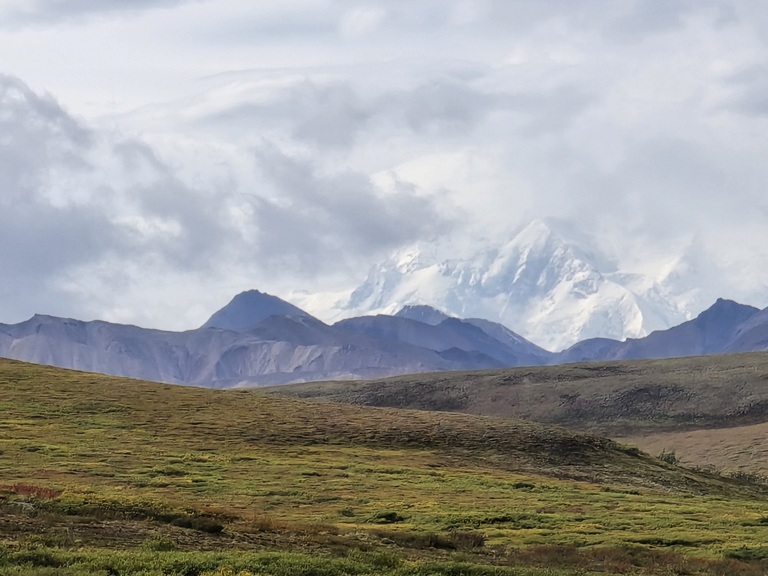
Mt Denali, looming over the vast tundra.

First caribou sighting. Obliged the tourists by remaining still for photos!

A closer view of the same caribou.

A group of caribou in the tundra. Note the awesome colours as ‘Fall’ emerges.

A Grizzlie sighting. Preoccupied eating berries. Not easy to spot in the dense tundra bush.

Another Grizzlie in the same area. At height but off in the distance.

And a Moose, for the daily trifecta.
In between seeking animals, we were treated to the majestic and vast scenery, of mountains, streams, tundra and the changing colours as ‘Fall’ (Autumn) beckons.
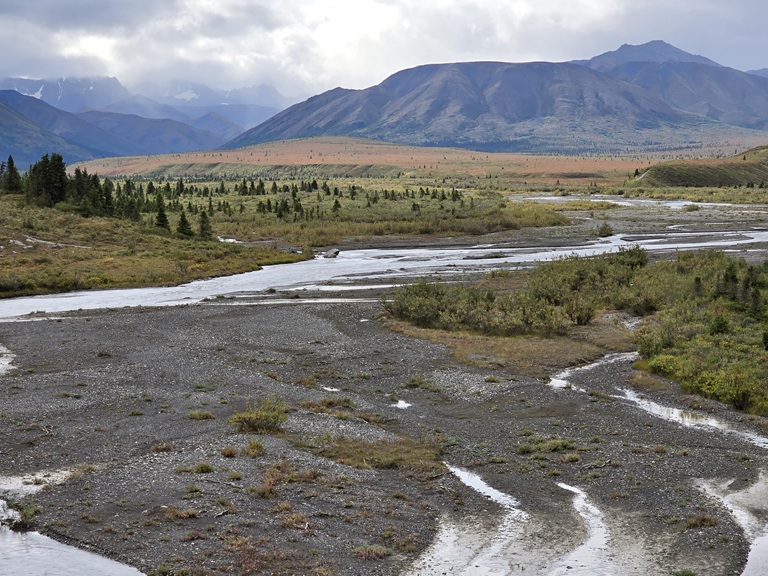
The vast landscape.
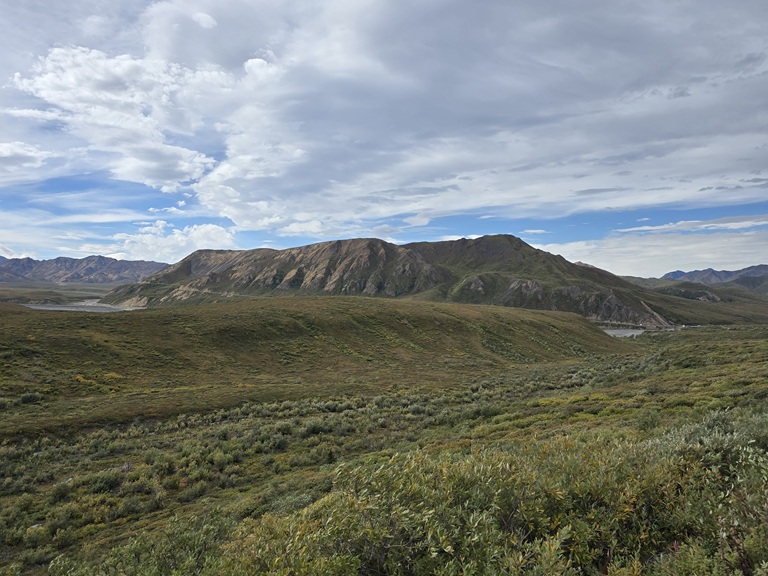
The tundra as far as the eye can see.
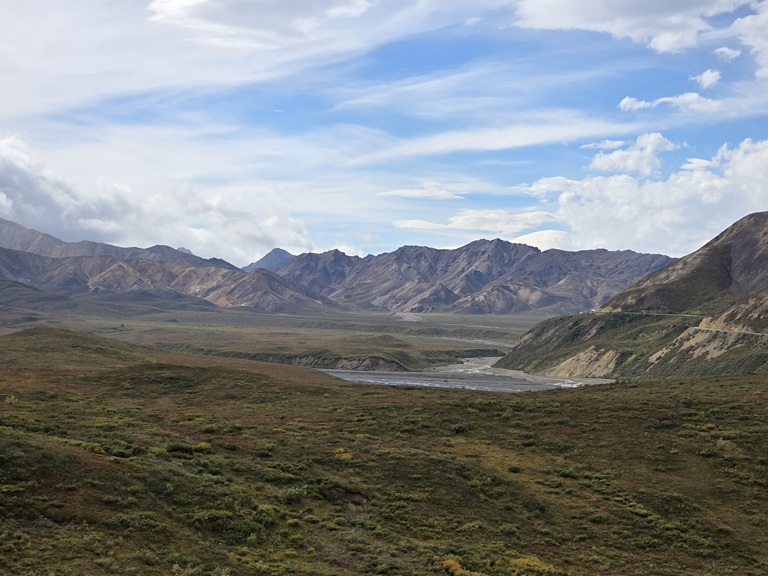
Every mountain unique in its beauty, with colour, shadow and light, contours and rugged posture of stillness and strength.
Meantime, so many stories to hear, of the short summers, the harsh winters, the dangers of bears and caribou, to the process of hibernation or the wood frog that literally freezes inside out, till the thaw. Truly, nature is so diverse, mysterious and inspiring.
And now, Denali National Park, a place where nature mostly dictates its trajectory, as the human impact is minimised where possible, and tourism is undertaken with conservation and the needs of the animal inhabitants of this vast terrain in mind.
Furthermore, while we can know of the cliched ‘lungs of the earth’ in the Amazon, the forests and tundra regions of North America are the third most important biomass areas on earth, taking into account the primacy of the planet’s oceans.
Leave a comment